Daily Steps & Your Health
Daily Steps & Your Health
How Many Steps Should We Take in a Day for Our Heart and Health?
For decades, “10,000 steps a day” has been the gold standard for a healthy lifestyle. Fitness trackers and wellness apps have turned that number into a global goal. But is 10,000 really the magic number for your heart and overall health, or just clever marketing? Let’s look at what science actually says about how many steps you really need each day.
The Origins of the “10,000 Steps” Rule
The idea of 10,000 steps a day didn’t come from a scientific study. It began in Japan in the 1960s, when a pedometer called Manpo-kei was released. In Japanese, manpo-kei literally means “10,000 steps meter.” The number stuck, partly because it was simple, memorable, and motivating. But modern research shows the ideal number of steps depends on your age, fitness level, and health goals, especially when it comes to your heart.
What Recent Studies Say About Daily Steps
In recent years, scientists have examined data from thousands of people across age groups and lifestyles.
Here’s what they’ve found:
1. 7,000–8,000 Steps May Be Enough for Longevity
A 2021 study published in JAMA Network Open followed over 2,000 adults aged 38–50 for more than a decade.
The results showed that participants who took at least 7,000 steps a day had a 50–70% lower risk of premature death compared to those who took fewer than 7,000. So, while more steps are generally better, the benefits level off around 8,000–10,000 steps for most adults.
2. Heart Health Improves Even Below 10,000 Steps
Another study in the European Journal of Preventive Cardiology (2023) analyzed data from over 226,000 people worldwide. It found that taking as few as 3,967 steps per day already reduced the risk of dying from any cause, while 2,337 steps lowered the risk of dying from cardiovascular diseases. However, every extra 1,000 steps added more protection.
This shows that even small increases in daily movement—walking to the store, pacing during phone calls, or taking the stairs, have measurable heart benefits.
3. More Steps Mean Stronger Benefits (Up to a Point)
The same meta-analysis found that health benefits continue to rise up to about 10,000–12,000 steps per day for younger adults, but the improvement curve flattens after that.
In short: More movement is good but extreme step counts aren’t necessary for better heart health.
Step Count and Intensity: Both Matter
It’s not just how many steps you take; it’s how you take them.
Short bursts of brisk walking, such as a 10-minute fast walk after lunch, can be as effective for cardiovascular health as longer, slower walks. Studies show that people who include moderate to vigorous steps (around 100–130 steps per minute) in their day have better blood pressure, cholesterol, and heart rate variability compared to those who walk the same number of steps at a slower pace. So, if your schedule is busy, focus on quality over quantity. Try to make part of your walk “brisk”, your breathing should be quicker, but you should still be able to talk.
How Step Counts Affect Your Heart and Metabolism
Walking impacts several key systems that protect your heart and metabolism:
Circulation: Walking increases blood flow and oxygen delivery to muscles and organs, reducing arterial stiffness.
Blood Pressure: Regular walking helps lower systolic and diastolic blood pressure by improving endothelial function (the lining of blood vessels).
Cholesterol and Blood Sugar: Studies show daily walking improves HDL (good cholesterol), reduces LDL (bad cholesterol), and enhances insulin sensitivity.
Inflammation: Consistent physical activity lowers inflammatory markers like CRP, reducing long-term cardiovascular risk.
Even light walking throughout the day protects your heart and metabolic health far beyond what step counts alone can show.
Step Goals by Age and Lifestyle
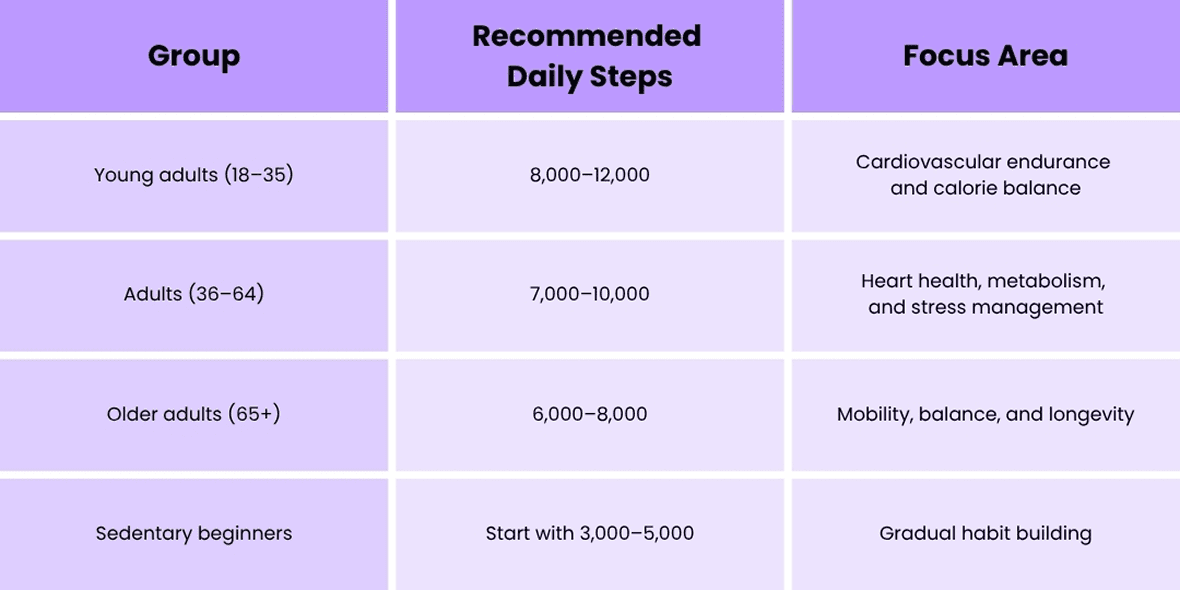
If you currently average 3,000 steps a day, jumping straight to 10,000 might be unrealistic. Instead, add 500–1,000 steps each week until you reach your sustainable target.
How SnoozUp Helps You Stay Consistent
At SnoozUp, we believe that better health starts with consistency, not perfection. Our Web3 lifestyle app encourages you to move more and sleep better by turning your daily habits into rewarding experiences. When you sync your wearable or phone, each step you take and each hour of quality sleep you earn contributes to your personal growth and yes, even real rewards. Instead of chasing arbitrary numbers, SnoozUp helps you understand your movement patterns, track your progress, and stay motivated with personalized challenges.
You don’t need to hit 10,000 steps every day to protect your heart.
Scientific evidence shows that 7,000–8,000 steps daily deliver most of the health benefits while even a minimum of 4,000 steps can significantly lower your risk of cardiovascular disease. What truly counts is staying active, moving regularly, and making it part of your lifestyle.
Every step you take strengthens your heart, sharpens your mind, and adds vitality to your days.
And with SnoozUp by your side, tracking your movement and progress becomes not just easier but more meaningful.
How Many Steps Should We Take in a Day for Our Heart and Health?
For decades, “10,000 steps a day” has been the gold standard for a healthy lifestyle. Fitness trackers and wellness apps have turned that number into a global goal. But is 10,000 really the magic number for your heart and overall health, or just clever marketing? Let’s look at what science actually says about how many steps you really need each day.
The Origins of the “10,000 Steps” Rule
The idea of 10,000 steps a day didn’t come from a scientific study. It began in Japan in the 1960s, when a pedometer called Manpo-kei was released. In Japanese, manpo-kei literally means “10,000 steps meter.” The number stuck, partly because it was simple, memorable, and motivating. But modern research shows the ideal number of steps depends on your age, fitness level, and health goals, especially when it comes to your heart.
What Recent Studies Say About Daily Steps
In recent years, scientists have examined data from thousands of people across age groups and lifestyles.
Here’s what they’ve found:
1. 7,000–8,000 Steps May Be Enough for Longevity
A 2021 study published in JAMA Network Open followed over 2,000 adults aged 38–50 for more than a decade.
The results showed that participants who took at least 7,000 steps a day had a 50–70% lower risk of premature death compared to those who took fewer than 7,000. So, while more steps are generally better, the benefits level off around 8,000–10,000 steps for most adults.
2. Heart Health Improves Even Below 10,000 Steps
Another study in the European Journal of Preventive Cardiology (2023) analyzed data from over 226,000 people worldwide. It found that taking as few as 3,967 steps per day already reduced the risk of dying from any cause, while 2,337 steps lowered the risk of dying from cardiovascular diseases. However, every extra 1,000 steps added more protection.
This shows that even small increases in daily movement—walking to the store, pacing during phone calls, or taking the stairs, have measurable heart benefits.
3. More Steps Mean Stronger Benefits (Up to a Point)
The same meta-analysis found that health benefits continue to rise up to about 10,000–12,000 steps per day for younger adults, but the improvement curve flattens after that.
In short: More movement is good but extreme step counts aren’t necessary for better heart health.
Step Count and Intensity: Both Matter
It’s not just how many steps you take; it’s how you take them.
Short bursts of brisk walking, such as a 10-minute fast walk after lunch, can be as effective for cardiovascular health as longer, slower walks. Studies show that people who include moderate to vigorous steps (around 100–130 steps per minute) in their day have better blood pressure, cholesterol, and heart rate variability compared to those who walk the same number of steps at a slower pace. So, if your schedule is busy, focus on quality over quantity. Try to make part of your walk “brisk”, your breathing should be quicker, but you should still be able to talk.
How Step Counts Affect Your Heart and Metabolism
Walking impacts several key systems that protect your heart and metabolism:
Circulation: Walking increases blood flow and oxygen delivery to muscles and organs, reducing arterial stiffness.
Blood Pressure: Regular walking helps lower systolic and diastolic blood pressure by improving endothelial function (the lining of blood vessels).
Cholesterol and Blood Sugar: Studies show daily walking improves HDL (good cholesterol), reduces LDL (bad cholesterol), and enhances insulin sensitivity.
Inflammation: Consistent physical activity lowers inflammatory markers like CRP, reducing long-term cardiovascular risk.
Even light walking throughout the day protects your heart and metabolic health far beyond what step counts alone can show.
Step Goals by Age and Lifestyle
If you currently average 3,000 steps a day, jumping straight to 10,000 might be unrealistic. Instead, add 500–1,000 steps each week until you reach your sustainable target.
How SnoozUp Helps You Stay Consistent
At SnoozUp, we believe that better health starts with consistency, not perfection. Our Web3 lifestyle app encourages you to move more and sleep better by turning your daily habits into rewarding experiences. When you sync your wearable or phone, each step you take and each hour of quality sleep you earn contributes to your personal growth and yes, even real rewards. Instead of chasing arbitrary numbers, SnoozUp helps you understand your movement patterns, track your progress, and stay motivated with personalized challenges.
You don’t need to hit 10,000 steps every day to protect your heart.
Scientific evidence shows that 7,000–8,000 steps daily deliver most of the health benefits while even a minimum of 4,000 steps can significantly lower your risk of cardiovascular disease. What truly counts is staying active, moving regularly, and making it part of your lifestyle.
Every step you take strengthens your heart, sharpens your mind, and adds vitality to your days.
And with SnoozUp by your side, tracking your movement and progress becomes not just easier but more meaningful.
December 8, 2025